Aashwasan offers unique solutions
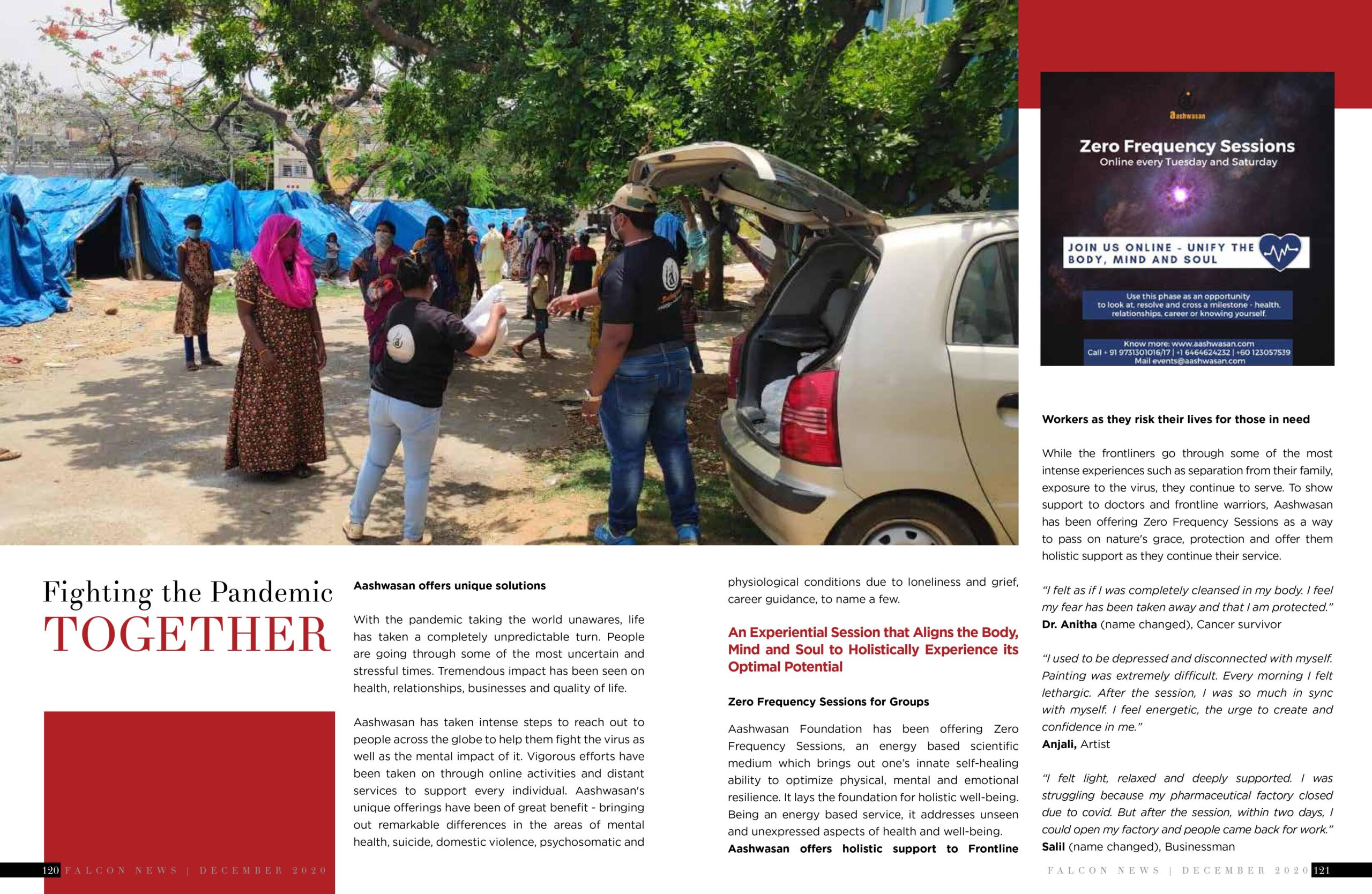
With the pandemic taking the world unawares, life has taken a completely unpredictable turn. People are going through some of the most uncertain and stressful times. Tremendous impact has been seen on health, relationships, businesses, and quality of life.
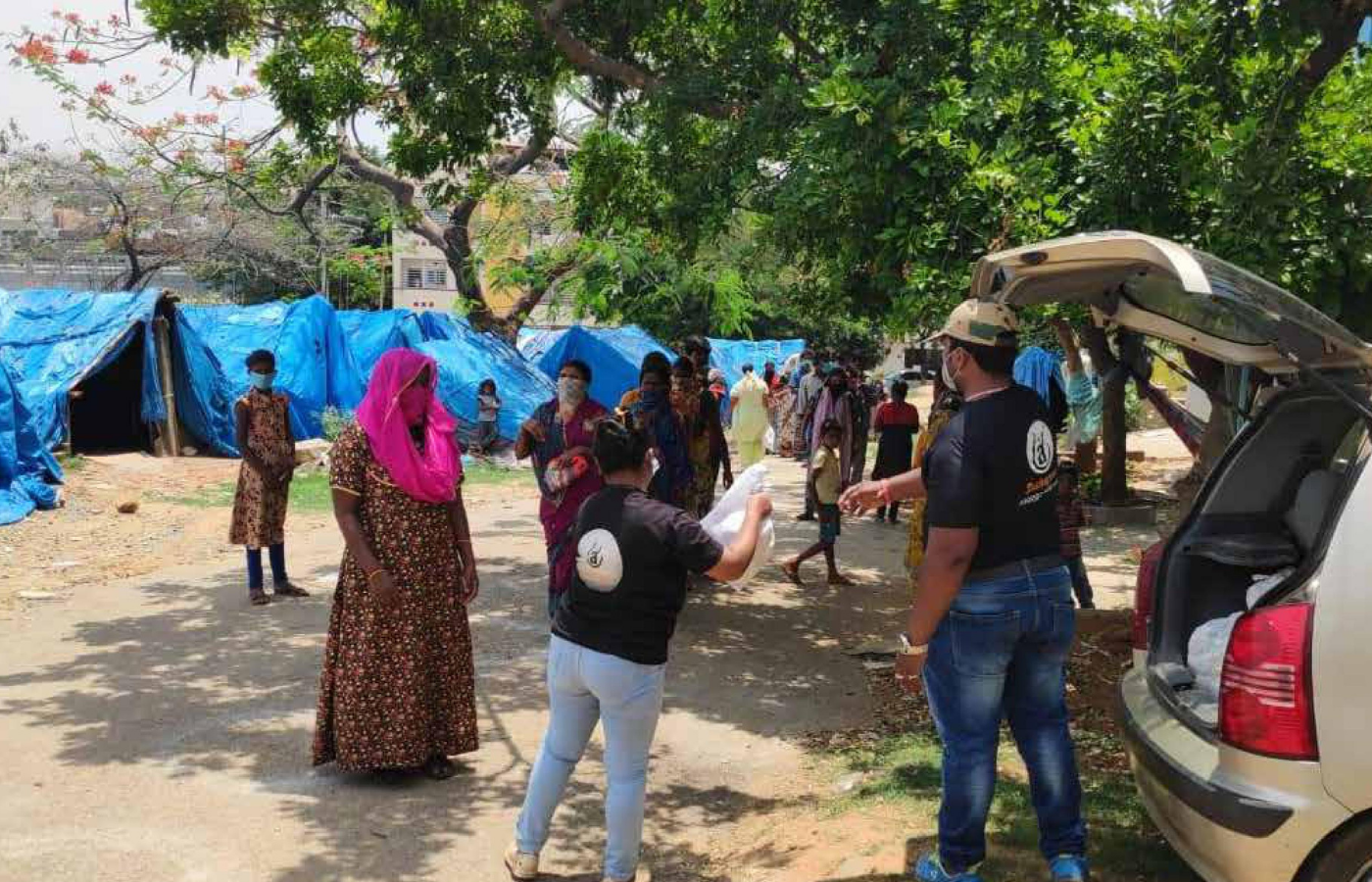
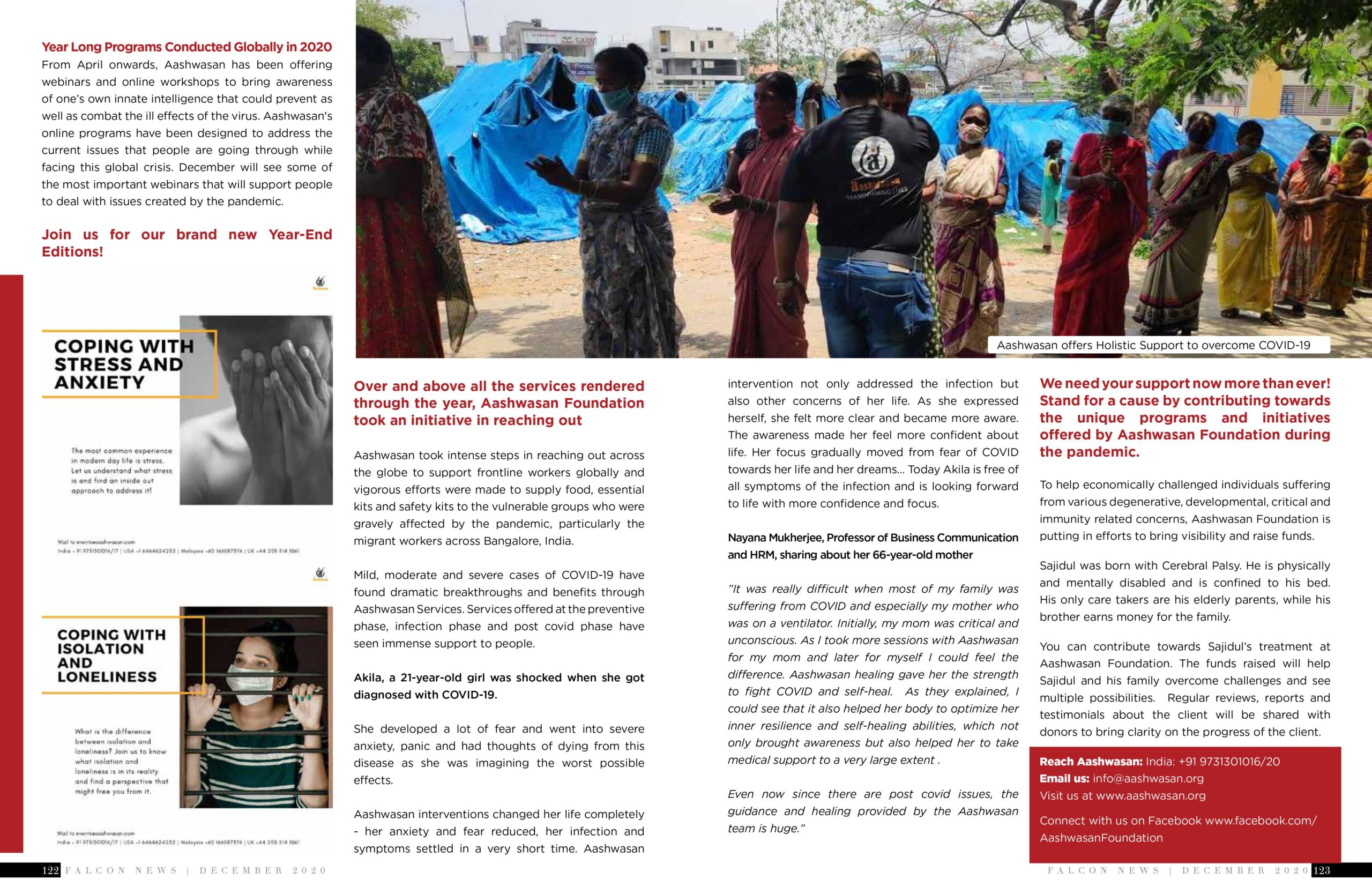
Aashwasan has taken intense steps to reach out to people across the globe to help them fight the virus as well as the mental impact of it. Vigorous efforts have been taken on through online activities and distant services to support every individual. Aashwasan’s unique offerings have been of great benefit – bringing out remarkable differences in the areas of mental health, suicide, domestic violence, psychosomatic and physiological conditions due to loneliness and grief, and career guidance, to name a few.
An Experiential Session that Aligns the Body, Mind, and Soul to Holistically Experience its Optimal Potential
Zero Frequency Sessions for Groups
Aashwasan Foundation has been offering Zero Frequency Sessions, an energy-based scientific medium which brings out one’s innate self-healing ability to optimize physical, mental, and emotional resilience. It lays the foundation for holistic well-being. Being an energy-based service, it addresses unseen and unexpressed aspects of health and well-being.
Aashwasan offers holistic support to Frontline Workers as they risk their lives for those in need.
While the frontliners go through some of the most intense experiences such as separation from their family and exposure to the virus, they continue to serve. To show support to doctors and frontline warriors, Aashwasan has been offering Zero Frequency Sessions as a way to pass on nature’s grace, protection, and offer them holistic support as they continue their service